
At phil&teds®, we’re parents too, which means we design products we’d genuinely use ourselves; to help you adapt, survive, and keep doing the things you love through the parenting day.
Life changes when you’ve got a little one in tow. If the outdoors, photography, fresh air and adventure are part of your identity, chances are you’ll find yourself spending a lot less time in nature once a new human arrives. But with the right gear, you don’t have to give it up entirely.
One of the best ways to reclaim the outdoors? A good hiking carrier.
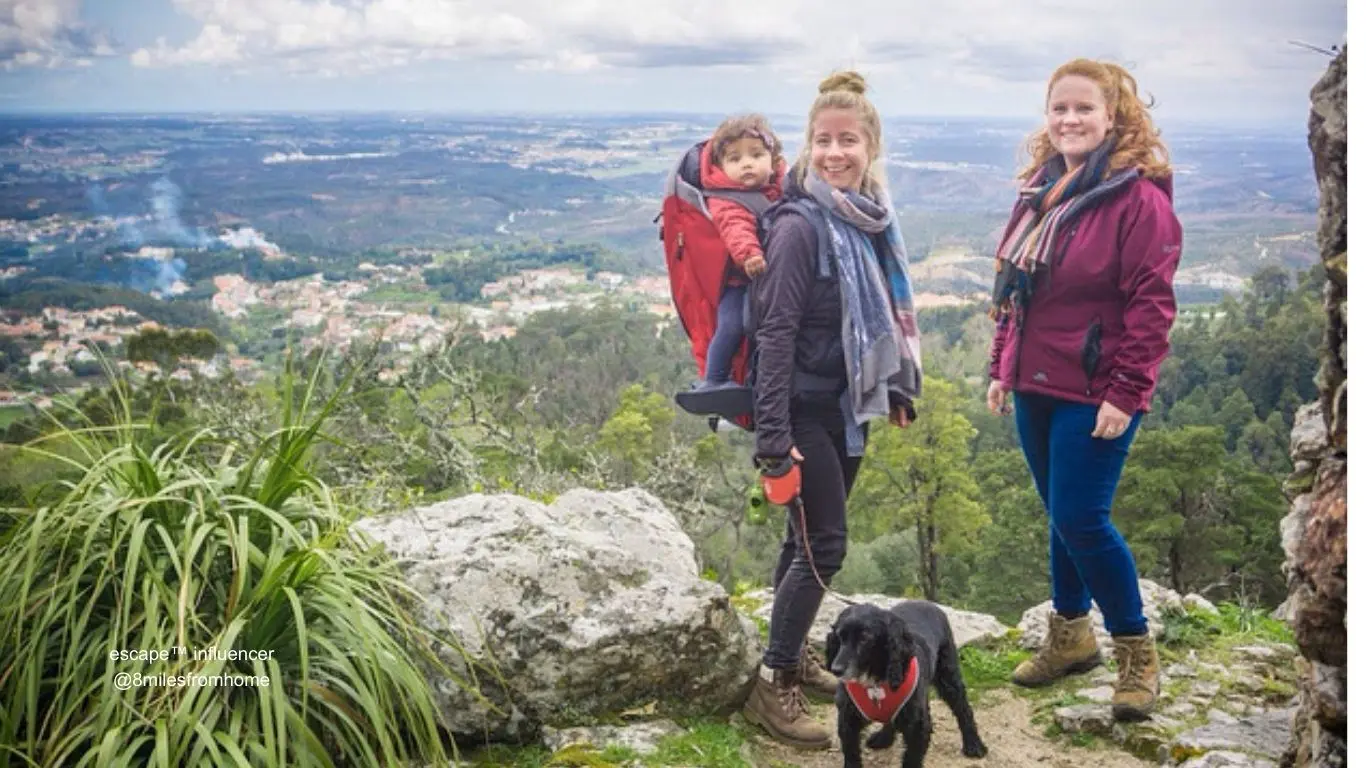
Why Strollers Can’t Do It All
Modern stroller design is impressive, and there are countless options to suit different lifestyles. Modular, bassinet, umbrella, three-wheel, four-wheel, “all-terrain” … the list goes on.
But here’s the reality: no matter how capable a stroller claims to be, there are trails it simply can’t conquer.
You know the ones. Narrow tracks, uneven ground, steep climbs, the kind that led to epic waterfalls, panoramic views, or that magical “pot of gold” moment at the end. We like to call them leprechaun trails.
And unfortunately, those trails are completely impassable with wheels.
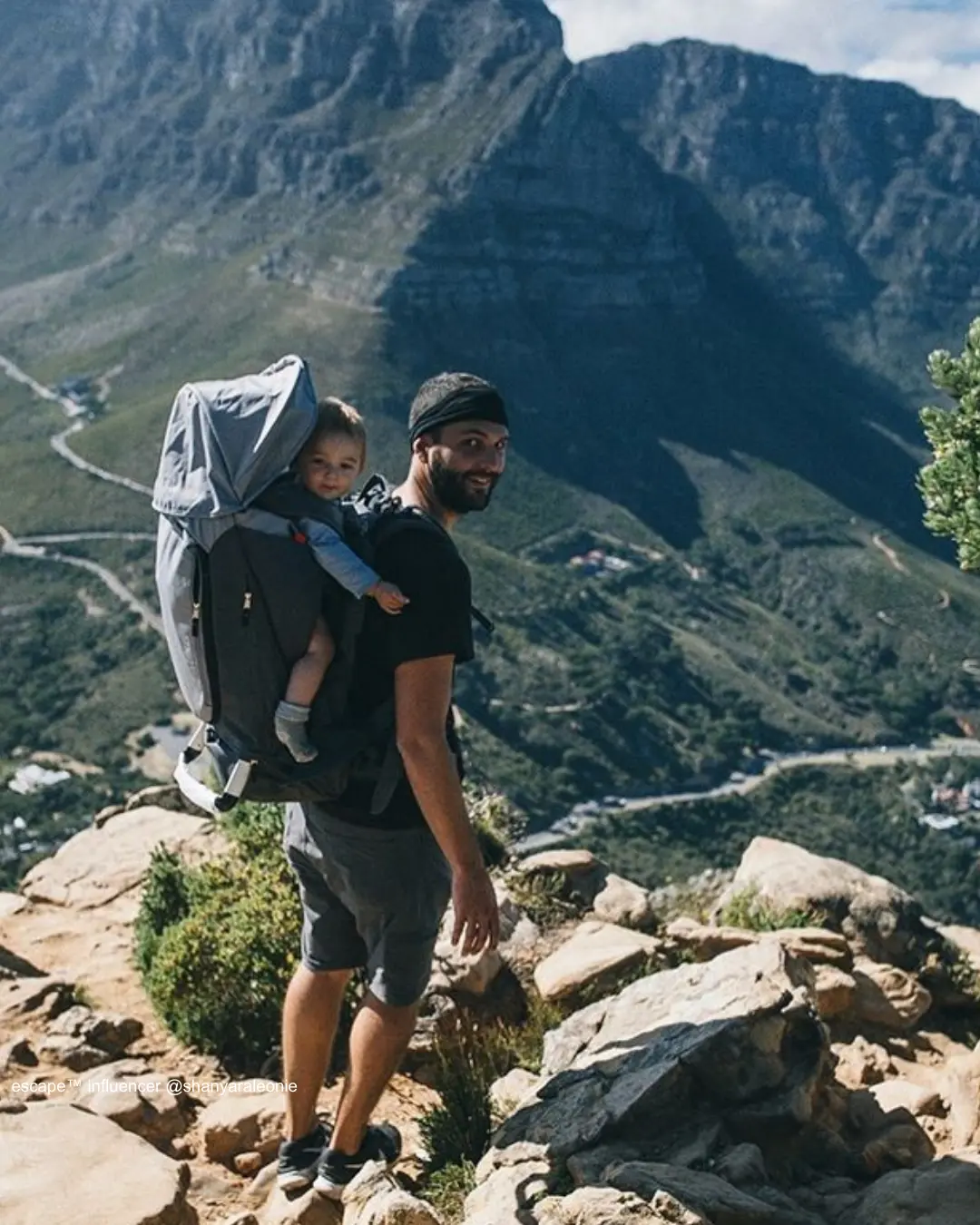
That’s Where a Hiking Carrier Comes In
A hiking carrier is essentially baby transport without wheels.
There are many types of baby carriers available, each with their own pros and cons. Here, we’re talking specifically about hard-shell baby backpacks, designed for children from around six months and up the go-to option for longer walks and rugged terrain.
These carriers are purpose-built for adventure, and when designed well, they make all the difference.
A Quick Reality Check: Yes, They’re Heavy
All baby carriers are heavy. You’re carrying the weight of the product plus your child, and sometimes that adds up to more than a bag of concrete.
This is why weight matters. The difference between carrying 17kg versus 21kg over an 8-mile hike is huge. When choosing a hiking carrier, always look for the lightest option that still delivers comfort and support.
Bonus? You’ll get stronger, burn extra calories, and enjoy a solid cardio workout while targeting glutes and quads. 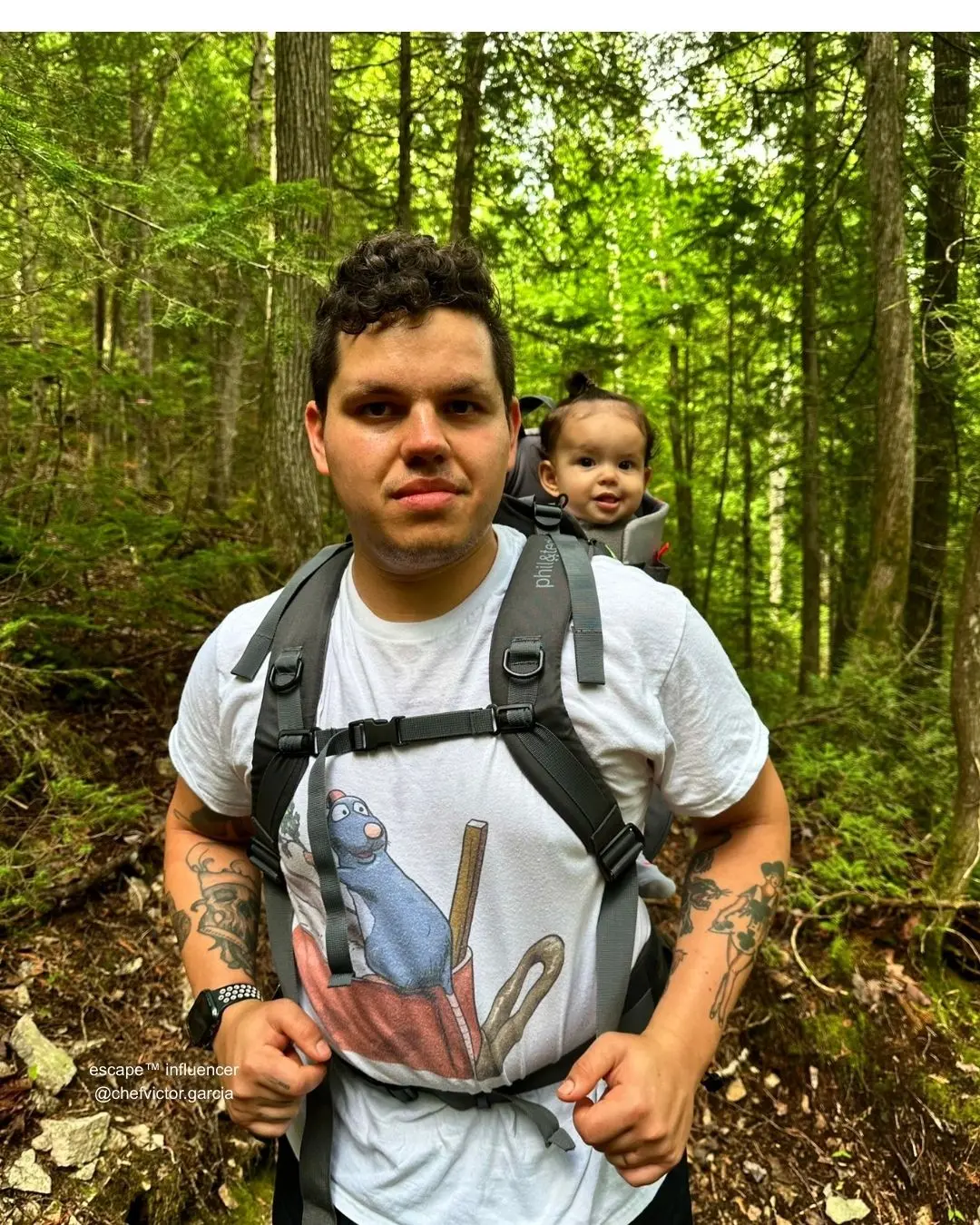
What to Look for in a Great Hiking Carrier
1. Wide, Supportive Straps for Weight Distribution
Fit matters and it varies from person to person. A carrier will feel completely different on a 6’6” adult compared to someone 5’9”. Even people of similar height can experience very different weight distribution.
Look for:
- Wide, well-padded shoulder straps
- Balanced load distribution
- Adjustable fit
Always try before you buy. Take your child into store, load them into the carrier, pick it up, and see how it feels.
2. Storage That Saves You from Being a Pack Mule
Parents carry a lot. A good hiking carrier should comfortably hold at least the contents of a day pack.
A great one will:
- Store everything you need
- Stay well balanced when fully loaded
- Still feel comfortable and easy to use
Less juggling = more enjoying the moment.
3. A Stable Kickstand for Easy Loading
Loading your child safely is non-negotiable. A sturdy, easy-to-use kickstand gives you a stable base while strapping them in and keeps the carrier upright as you lift it onto your back.
This is especially important when you’re flying solo.
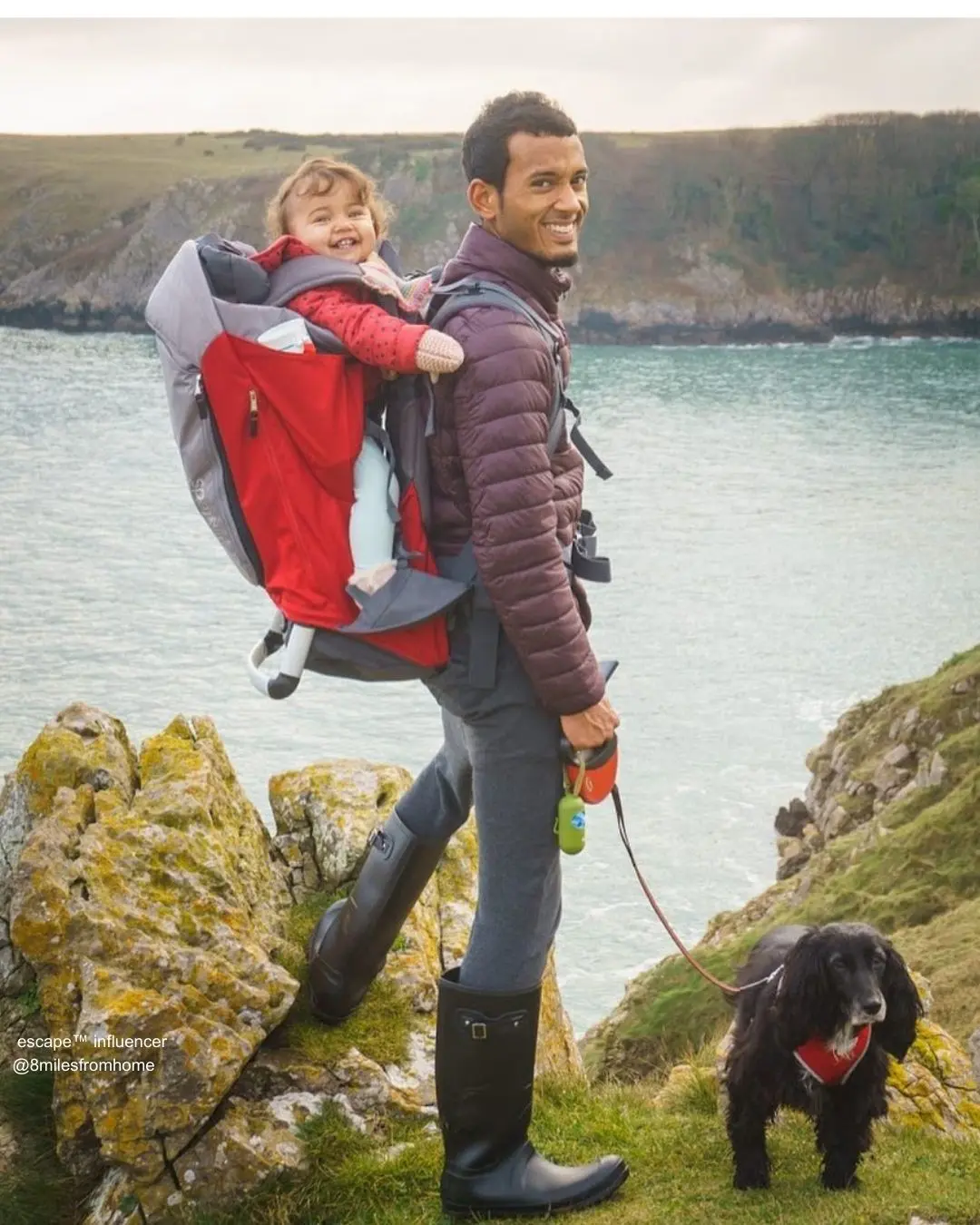
So, What Makes a Hiking Carrier Truly Great?
It comes down to comfort, balance and usability.
Wide straps, smart weight distribution, generous storage, and a reliable kickstand work together to make the load manageable so you can focus on the walk, the views, and the memories.
Get Back Out There
A well-designed hiking carrier lets you enjoy pre-baby passions with your baby not in spite of them.
Our advice? Always try your baby backpack at a retailer before you buy. Comfort is personal, and the right fit makes all the difference.
Happy hiking 🌿